

As a supplier of Nasal Spray Capping Machines, I understand the critical importance of ensuring the smooth feeding of caps in these machines. A well - functioning capping process is essential for the efficiency and quality of nasal spray production. In this blog, I will share some key strategies and considerations to achieve seamless cap feeding in a Nasal Spray Capping Machine.
Understanding the Cap Feeding System
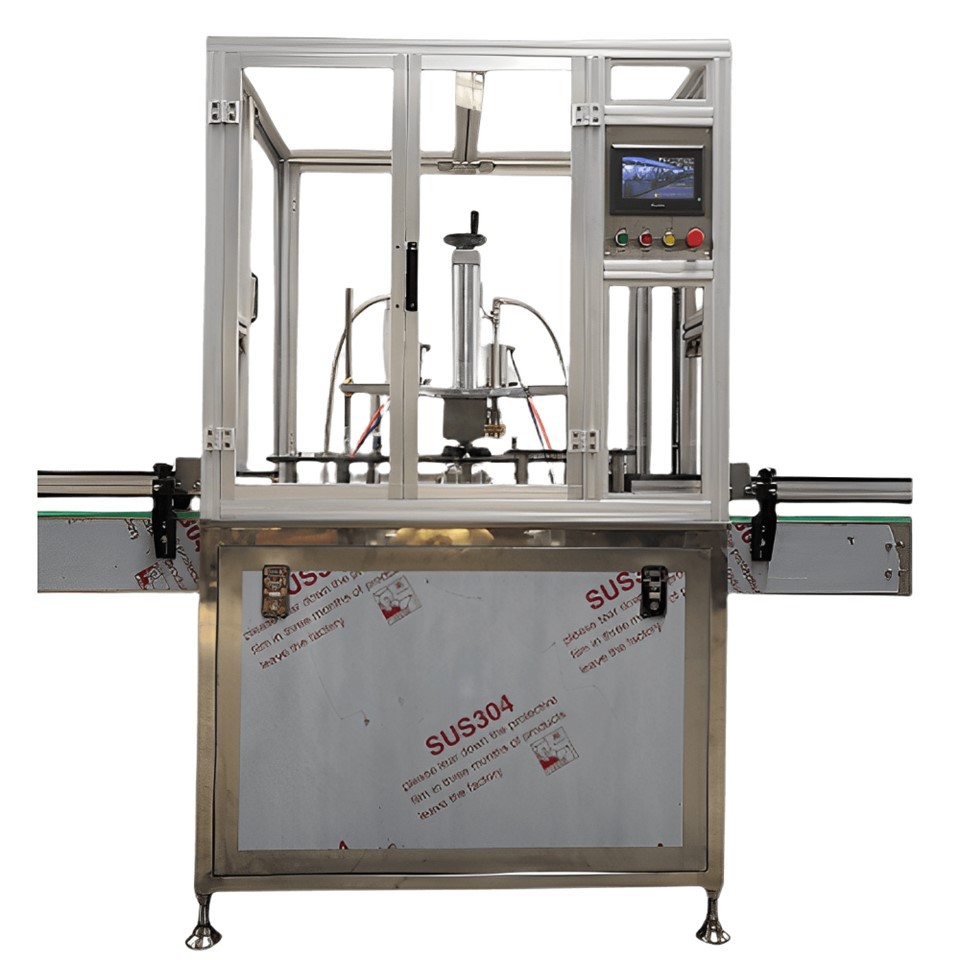
Before delving into the ways to ensure smooth cap feeding, it's crucial to understand the basic components of the cap feeding system in a Nasal Spray Capping Machine. The cap feeding system typically consists of a cap hopper, a cap sorting mechanism, a cap delivery track, and a capping head. The cap hopper stores a large quantity of caps, the sorting mechanism arranges the caps in the correct orientation, the delivery track transports the caps to the capping head, and the capping head places and secures the caps onto the nasal spray bottles.

Selecting the Right Caps
The quality and design of the caps play a significant role in the smooth feeding process. Caps should be made of high - quality materials that are dimensionally stable. Any variations in cap size, shape, or weight can cause jams or misfeeds in the capping machine. For example, if the caps have uneven edges or inconsistent wall thickness, they may not slide smoothly through the sorting and delivery mechanisms.
When choosing caps, it's also important to consider their compatibility with the capping machine. Some capping machines are designed to work with specific types of caps, such as screw - on caps or snap - on caps. Make sure to select caps that are recommended by the machine manufacturer. You can learn more about the suitable caps for our Nasal Spray Capping Machine by referring to our product documentation.
Maintaining the Cap Hopper
The cap hopper is the starting point of the cap feeding process. It should be kept clean and free of debris. Regularly inspect the hopper for any signs of wear or damage, such as cracks or rough surfaces that could cause caps to get stuck.
The level of caps in the hopper also needs to be monitored. If the hopper is overfilled, caps may pile up and cause blockages. On the other hand, if the hopper runs out of caps, the capping process will come to a halt. Consider installing a level sensor in the hopper to automatically alert operators when the cap level is low.
Optimizing the Cap Sorting Mechanism
The cap sorting mechanism is responsible for arranging the caps in the correct orientation for capping. Different types of sorting mechanisms are available, such as vibratory bowls, centrifugal sorters, and linear sorters. Each type has its own advantages and limitations, and the choice depends on the shape and design of the caps.
Vibratory bowls are commonly used for sorting caps. They use vibration to move the caps around and orient them correctly. To optimize the performance of a vibratory bowl, adjust the vibration frequency and amplitude according to the characteristics of the caps. If the vibration is too strong, caps may bounce out of the bowl; if it's too weak, caps may not move properly.
Centrifugal sorters use centrifugal force to separate and orient the caps. They are suitable for caps with complex shapes. Make sure to set the speed of the centrifugal sorter correctly to ensure efficient sorting.
Ensuring a Smooth Cap Delivery Track
The cap delivery track is the pathway through which the caps travel from the sorting mechanism to the capping head. It should be straight, smooth, and free of any obstructions. Regularly clean the track to remove any dust, dirt, or cap fragments that could impede the movement of the caps.
The width of the delivery track should be carefully adjusted to match the size of the caps. If the track is too wide, caps may wobble and get misaligned; if it's too narrow, caps may get stuck. Additionally, consider installing guides or rails along the track to keep the caps in place and prevent them from falling off.
Calibrating the Capping Head
The capping head is the final component in the cap feeding process. It needs to be properly calibrated to ensure that the caps are placed and tightened correctly onto the nasal spray bottles. Check the alignment of the capping head with the bottles and adjust it if necessary.
The torque applied by the capping head is also crucial. If the torque is too low, the caps may not be securely fastened, which could lead to leakage. If the torque is too high, it may damage the caps or the bottles. Use a torque tester to measure and adjust the torque settings of the capping head.
Implementing Quality Control Measures
Quality control is an essential part of ensuring smooth cap feeding. Install sensors at various points in the cap feeding system to detect any issues, such as missing caps, misaligned caps, or jams. These sensors can send signals to the machine's control system, which can then take appropriate actions, such as stopping the machine or ejecting defective caps.
Regularly perform visual inspections of the capped bottles to check for any signs of improper capping. Train your operators to identify and address common capping problems, such as loose caps, cross - threaded caps, or damaged caps.
Training and Maintenance
Proper training of the operators is crucial for the smooth operation of the Nasal Spray Capping Machine. Operators should be familiar with the machine's functions, maintenance procedures, and troubleshooting techniques. Provide comprehensive training programs that cover all aspects of the cap feeding process, from cap selection to capping head calibration.
Regular maintenance of the capping machine is also essential. Follow the manufacturer's recommended maintenance schedule, which may include tasks such as lubricating moving parts, replacing worn - out components, and cleaning the machine. By keeping the machine in good condition, you can minimize the risk of breakdowns and ensure consistent cap feeding performance.
Integrating with Other Processes
In a nasal spray production line, the capping process is often integrated with other processes, such as filling and labeling. Make sure that the cap feeding system is synchronized with these other processes. For example, the speed of the cap feeding system should match the speed of the filling machine to avoid bottlenecks.
If you are also interested in Bag On Valve Aerosol Filling or Bag On Valve Filling Equipment, our machines can be easily integrated into a complete production line to provide a seamless solution for your nasal spray production needs.
Conclusion
Ensuring the smooth feeding of caps in a Nasal Spray Capping Machine requires a combination of proper cap selection, well - maintained equipment, optimized processes, and effective quality control measures. By following the strategies outlined in this blog, you can improve the efficiency and reliability of your capping process, reduce downtime, and produce high - quality nasal spray products.
If you are looking for a reliable Nasal Spray Capping Machine or need further advice on cap feeding solutions, we are here to help. Contact us to discuss your specific requirements and explore how our machines can meet your production needs.
References
- "Principles of Packaging Machinery" by J. A. Brennan
- "Handbook of Aerosol Technology" by A. R. Baron and K. Willeke