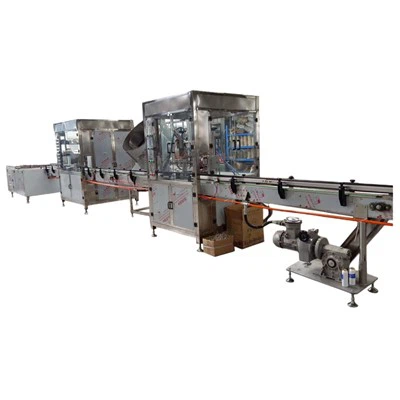
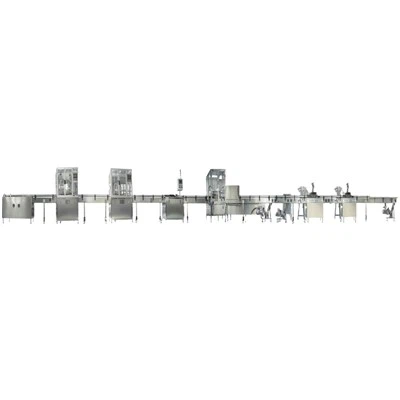
Yangzhou Meida Filling Machinery Co., Ltd. is one of the leading manufacturers and suppliers of automatic polyurethane pu foam spray filling machine production line in China. With a professional production team, we are able to meet the needs of the majority of our customers. Welcome to buy advanced automatic polyurethane pu foam spray filling machine production line at competitive price from our factory.
Types of PU Foam Spray
What is Polyurethane Foam Spray?
Polyurethane (PU) foam is a one-component, moisture-curing, expanding material used in various applications, including insulation and grouting. It is a semi-rigid aerosol-based product that reacts with moisture in the air to expand as it cures, forming a solid, durable foam. PU foams are highly versatile and bond well to many surfaces due to their high adhesion power.
PU foam is commonly referred to by various names in the industry, including:
One-component PU foam
Polyurethane foam
OCF PU foam sealant
Gap-filling PU foam
Window assembling foam
Construction foam
Sound isolation foam
Heat insulation foam


Straw Foams (Disposable Applicator)
Straw Foam is best suited for quick, small, and simple DIY tasks. It's inexpensive and effective for sealing large gaps but lacks control, leading to more waste and less precision.
It's perfect for those who need a fast fix without concern for fine details.
Gun Foams (Reusable Foam Gun)
Gun Foam, on the other hand, is ideal for professional use, offering high precision and efficiency. It's perfect for larger projects like door and window installation where control over the foam bead is essential.
While it requires a higher initial investment and maintenance, the long-term savings and reduced waste make it a better choice for frequent, detailed work.

Benefits of PU Foam Spray
| Feature | Straw PU Foam | Gun PU Foam |
| Ease of Use | Simple, no tools required | Requires a reusable gun |
| Cost | Lower initial cost | Higher initial cost (due to gun) |
| Application Speed | Quick, great for small DIY jobs | Slower, but more efficient for large projects |
| Control | Lower control, less precise | High control, great for precision |
| Expansion | High expansion, good for large gaps | Lower, more stable expansion |
| Waste | Higher waste due to excess expansion | Lower waste, more efficient |
| Cleanup | No cleaning required, disposable | Requires cleaning and maintenance of the gun |
| Best For | Quick fixes, small gaps, DIY tasks | Professional, large projects, precision work |
Production Process Flow Of PU Foam Spray

The process begins with a critical can purge and dry function, using high-pressure air to remove any moisture, dust, or debris from the empty cans. Immediately following this, the two reactive liquid components are accurately dosed into the can:
MDI (Methylenediphenyl diisocyanate)
PPG (Polyol/Polypropylene Glycol) These materials are filled to precise volumes to ensure consistent chemical reaction and foam quality.

PU Foam Valve Inserting + Crimping
The aerosol valve is automatically inserted into the can and secured via precision crimping. This creates a hermetic seal, ensuring the container can safely hold the high-pressure propellants and liquid foam mixture without leaking.

Crimping + 4-head DME & LPG Filling
Once sealed, the cans move to the gassing station. Two propellant gases-DME (Dimethyl Ether) and LPG (Liquefied Petroleum Gas)-are injected through the valve. These gases not only pressurize the can but also act as solvents to help dispense the foam.

Automatic In-line Shaking
To ensure product stability, the filled cans undergo mechanical shaking (typically tumbling at 90°). This crucial step mixes the heavy liquids (MDI/PPG) with the lighter propellants, creating a uniform emulsion before the product is packaged.

For safety and quality assurance, every can passes through a safety-rated weighing station. Any product that does not meet the strict weight specifications is automatically rejected, preventing under-filled or over-pressurized cans from reaching the market.

Gun-Type Adaptor Pressing
For professional-grade products, the machine attaches a threaded gun adapter to the valve cup. This allows the end-user to attach a reusable foam gun for precision application.

Straw-Type Cap Pressing
For DIY or retail products, a straw applicator cap is pressed onto the can. This provides a convenient, all-in-one solution for consumers who do not own a foam gun.

Clamping Inkjet Coding Belt
In the final stage, cans are secured by a clamping conveyor belt to expose the bottom dome. An inkjet printer marks each unit with essential traceability data, including production dates, batch codes, and expiry information.
See it In Action
Technical Parameters
| Model |
qGQ Automatic Polyurethane PU Foam Spray Filling Machine Production Line
|
| Production capacity | 1800-3600Cans per hour ( 30-60 cans per minute) |
| Applicable can diameter | 35-65mm |
| Applicable Can Height | 70-330mm |
| applicable valve | 1'' (25.4mm) |
| working pressure | 0.6-1MPa |
| gas consumpiton | 0.6-1m3/min |
| MDI filling volume | 10-500ml |
| pPG filling volume | 10-500ml |
| Liquid Filling accuracy | ≤±1% |
|
DME filling volume |
10-500ml |
| LPG filling volume | 10-500ml |
|
Weight Tolerance |
±0.5g |
highlight : Automatic In-line Shaking (90°) After Filling
Meida's PU foam production lines include a dedicated automatic shaker placed directly after liquid filling and gas filling.
This shaking rotates the filled can (often about 90° or horizontally) while the contents are still in a fluid or partially mixed state. This type of in-line shaking is common in dedicated PU foam lines because:
01
More Complete Mixing of Foam Components
PU foam contains reactive liquid components and propellant gases. Shaking shortly after filling helps ensure uniform distribution of gases and liquids inside the can, which is critical for consistent foam quality. Evidenced by specialized aerosol shake technology - for example, linear in-line gas shaker systems that agitate cans during gassing for faster, more thorough mixing.
02
Improves Dissolution and Homogeneity
Automatic swing/shaking mixers are designed to help the reactive materials and propellant dissolve uniformly, especially important for PU foam where non-homogeneous mixing can lead to inconsistent expansion and performance. Some semi-automatic equipment uses angled (e.g., 60°) shaking to promote better mixing.
03
Optimizes Production Flow
Automatic shaking integrated into the production line reduces manual handling and speeds up throughput. It's especially valuable in higher-volume aerosol production where each can needs to be properly stabilized before final packaging and quality checking.

Semi‑Automatic Shaking After Boxing (Other Suppliers)
Other suppliers may offer a stand‑alone semi‑automatic shaker that is used after the cans have been boxed - not integrated into the filling line. This kind of equipment typically:
Less Effective Early Mixing
Shaking after boxing means the product may not be fully mixed when it leaves the filling/gassing station. This can be fine for less sensitive products, but for PU foam - which has reactive chemistry - it may reduce the uniformity of the propellant/liquid mix.
Lower Cost and Simpler Machinery
Semi-automatic shakers placed at the end of a line are typically less expensive and simpler (e.g., basic swing or vibration units). They may be sufficient for light industrial or low-volume operations where precision mixing isn't as critical.
Manual Loading/Operation
These shaker machines often require more manual loading and supervision by operators, which works for smaller production volumes or other aerosol types where stringent mixing isn't vital.


Stop Paying for Manual Labor-Start Automating Your PU Foam Line.
Why waste money on manual boxing and shaking? Meida's 2800C high-speed line features 100% automated in-line 90° shaking, saving you thousands in labor costs while ensuring perfect foam quality. Get your custom ROI projection today.
Hot Tags: automatic polyurethane pu foam spray filling machine production line, China automatic polyurethane pu foam spray filling machine production line manufacturers, factory, flexible aerosol can filling line, multi-functional aerosol can filling process